


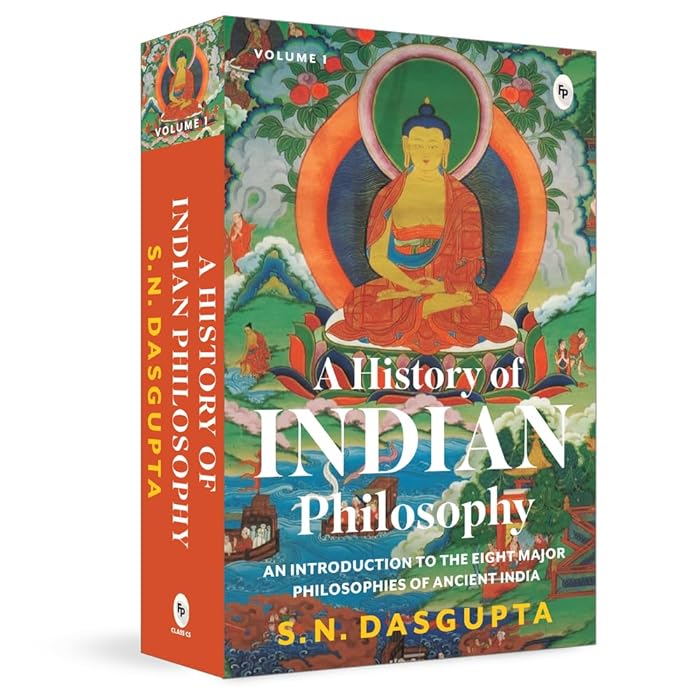
A History of Indian Philosophy Vol. I
$ 65.92
*History of Indian Philosophy Vol. I* is a significant work by **Surendranath Dasgupta**, first published in 1922. This volume provides a comprehensive analysis of the development of Indian philosophy from its earliest roots to the period of the *Upanishads*. Dasgupta’s work is crucial for understanding the evolution of philosophical thought in India, particularly in the context of ancient and classical Indian traditions. ### Key features of the book: 1. **Historical Overview:** – The book traces the origins of Indian philosophical thought, beginning with the **Vedic period** and the religious and intellectual practices that emerged during it. – It offers insights into early philosophical schools like **Samkhya**, **Yoga**, **Vedanta**, and **Mimamsa**, which arose as part of the dialogue with religious practices and metaphysical speculations. 2. **Philosophical Schools:** – **Vedic Philosophy**: An exploration of the Vedic hymns, their metaphysical ideas, and the foundational spiritual practices such as sacrifices and rituals. – **Upanishadic Philosophy**: The Upanishads are a crucial text in the development of Indian thought, moving from ritualistic practices to introspective philosophical speculation, with concepts such as **Brahman** (the ultimate reality) and **Atman** (the self). – **Orthodox Schools**: Includes detailed studies on the **Nyaya**, **Vaisheshika**, **Mimamsa**, and **Vedanta** schools, focusing on logic, metaphysics, and epistemology. – **Heterodox Schools**: A section on non-Vedic traditions such as **Buddhism** and **Jainism**, exploring their unique perspectives on suffering, liberation, and ethics. 3. **Philosophical Influence:** – The influence of Indian philosophy on other traditions, both in the East and the West, is explored, showcasing the deep philosophical connections that transcend cultural boundaries. 4. **Intellectual Context:** – Dasgupta places Indian philosophy in its **historical and cultural context**, showing how it evolved alongside the political, social, and religious changes in ancient India. 5. **Critical Analysis:** – The book offers an analytical commentary on the philosophical systems, emphasizing their strengths and weaknesses, as well as their contributions to global philosophical thought. ### Structure: Volume I specifically covers: – The early developments of Indian thought, including the **Vedic period** and the rise of **Upanishadic thinking**. – Philosophical discussions on subjects like metaphysics, ethics, epistemology, and the nature of reality. ### Importance: – **Scholarly Insight**: The work is highly regarded for its scholarly depth and is considered one of the most authoritative resources on Indian philosophy. – **Historical Context**: It provides not only the ideas and theories but also contextualizes them within the socio-political and cultural history of India. – **Accessible to both students and scholars**: While detailed and academic, Dasgupta’s writing is designed to be accessible to anyone interested in the subject. In summary, *History of Indian Philosophy Vol. I* by Surendranath Dasgupta offers a rich, detailed exploration of the philosophical thought that shaped ancient India, providing essential reading for anyone interested in the history of Indian intellectual traditions.
Cross References
Cross Reference
- UAC: HU 2000C
- Sunair: CH100
Specs
Specifications
- Diameter (mm): 105
Related products
-
 Out of stock
2 history books (Jange azeem awal Jange azeem do’em) Deal set
$ 4.53 Read moreSKU: HU4692C
-

Balochistan Tareekh Aur Muashrat
$ 2.07 Add to cartSKU: HU1003C
-
 Out of stock
Area 51: An Uncensored History of America’s Top Secret Military Base
$ 20.10 Read moreSKU: HU4628C
-
 Out of stock
History Year by Year
$ 27.69 Read moreSKU: HU1005